For decades, stadiums were places almost exclusively associated with match day. When there was no competition taking place, the venue remained closed to the public.
Today, many traditional stadiums have evolved into multifunctional entertainment venues, capable of hosting major concerts, immersive experiences, corporate events and, of course, sporting events.
This transformation increases the complexity of the space, but it also creates an opportunity. Let’s explore how wayfinding in stadiums and entertainment venues can become an essential part of the overall visitor experience.
Elevating signage for a new generation of sports and entertainment venues
In sports stadiums and large entertainment venues, the fundamental role of wayfinding is to help people understand the space so they can reach their destination easily.
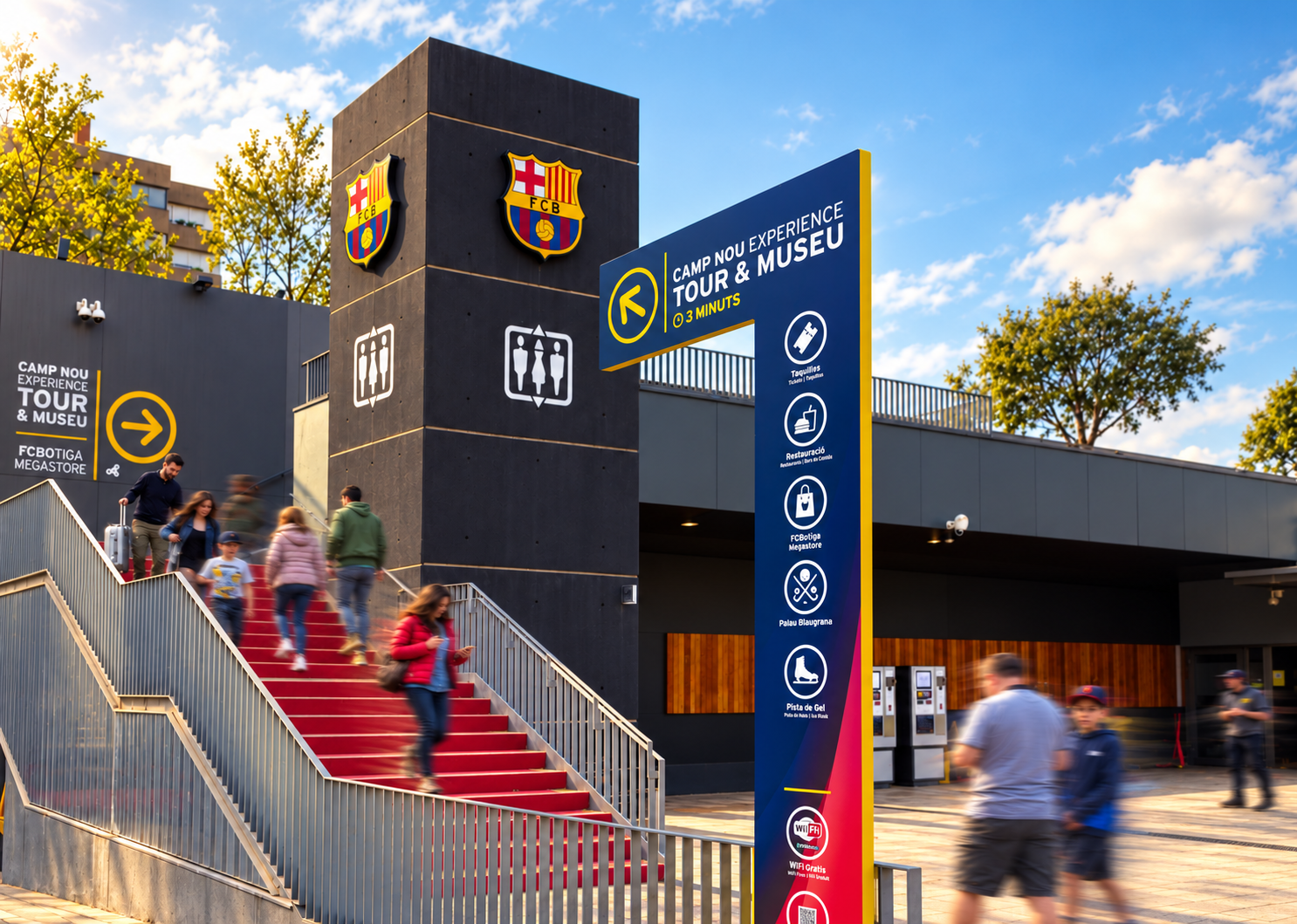
At the same time, signage plays an important role in how the venue is perceived. Colour, materials, lighting, environmental graphics, symbols and brand-related elements can help visitors not only find their way, but also understand where they are and remember the experience.
7 strategic principles of wayfinding design
An effective wayfinding strategy must respond both to the characteristics of the space and to the needs of its users. These are seven key principles for designing an effective signage system:
1. Understand the space before designing the signage
Every venue is different and requires a tailored wayfinding strategy. Before starting the design process, it is essential to analyse the space, routes, users and identity of the venue.
2. Create a clear information hierarchy
More information does not necessarily mean better orientation.
Providing only the information users need — clearly and visibly — at each decision point allows visitors to navigate the space intuitively.
3. Use identity as a wayfinding tool
The identity of the venue can itself become a powerful wayfinding tool.
Colour, environmental graphics, symbols, recognisable features, architectural references and interpretive content can help differentiate areas, reinforce routes and create meaningful landmarks.
4. Integrate wayfinding into the architecture
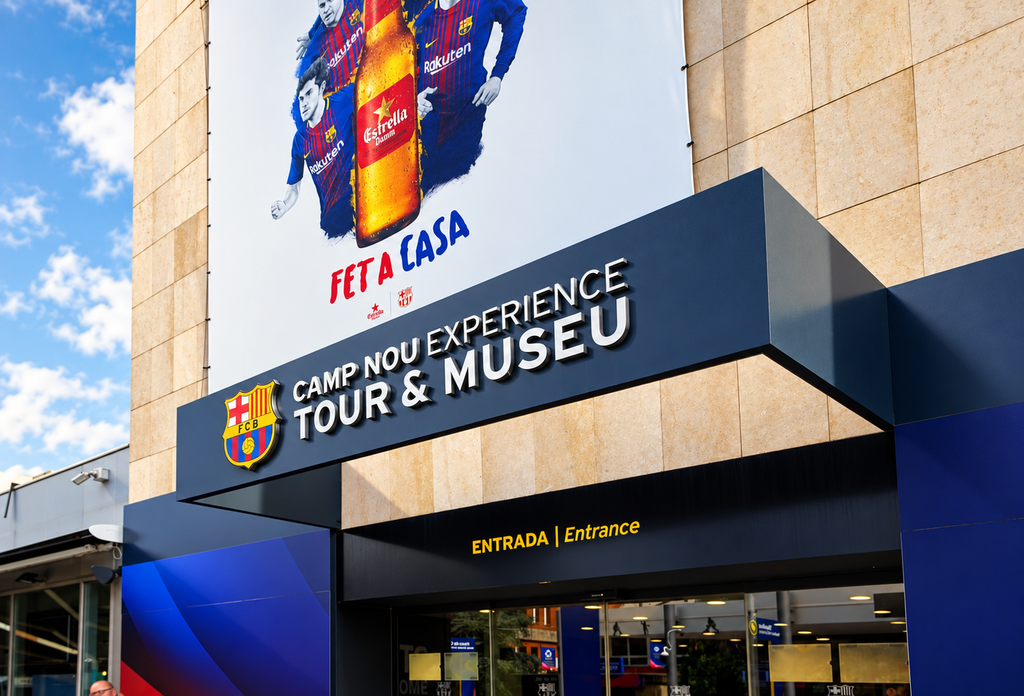
Signage should not be treated as an additional layer introduced at the end of the project.
Scale, materials, positioning, colour and lighting should work in harmony with the architecture, allowing the system to become a natural part of the space.
5. Design for real environmental conditions
Not every sports venue is an enclosed building.
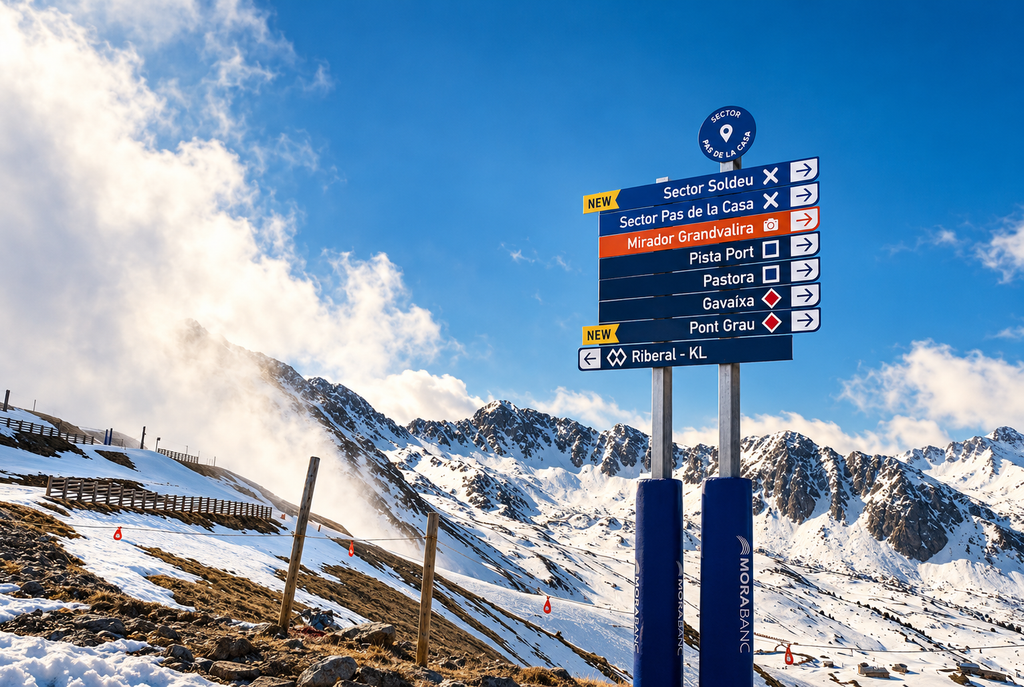
In outdoor environments, signage systems need to combine durability and flexibility, adapting both to demanding high-mountain conditions and to the continuous changes taking place across the resort.
6. Design systems that adapt to different events
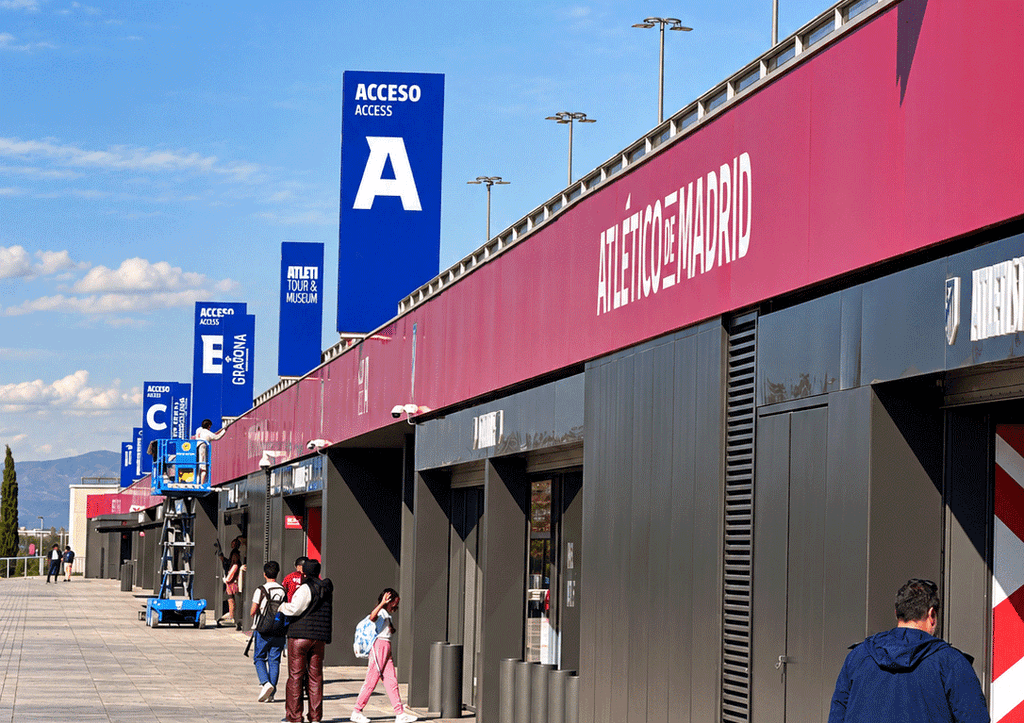
One of the main challenges when a stadium evolves into a multifunctional entertainment venue is responding to the operational requirements of each event.
The objective is no longer to design signage for a single scenario, but to create a system capable of maintaining clear orientation and spatial legibility as the venue configuration, user profiles and destinations change.
7. Create a consistent experience throughout the entire journey
The visitor experience begins before entering the venue.
Arrival, external access points, security checks, gates, sectors, internal circulation, services, food and beverage areas and departure all form part of the same journey.
For the system to work effectively, there must be continuity across every stage of that experience.
European Wayfinding Awards 2026 | 🏆WINNER: Best Wayfinding for Sports, Entertainment, MICE and Temporary Event Venues

Our work across sports venues and multifunctional entertainment destinations has been recognised at the European Wayfinding Awards in the category Wayfinding for Sports, Entertainment, MICE and Temporary Event Venues.
Related posts we recommend:
©️ Señalización con marca propia: la identidad corporativa más allá del logotipo