Without knowing it, while Georges Claude was developing the neon lamp with the intention of demonstrating the industrial applications of this gas, he was shaping one of the most revolutionary advertising media of the 20th century: the illuminated sign.
In the 1920s and 1930s, the birth of modern branding and the consolidation of advertising as a professional industry made Times Square (New York) and Pigalle (Paris) epicenters of neon. It was a key moment: the name of many businesses ceased to be a second-level commercial element and became the main protagonist of streets and avenues. At that time, buildings served as a support for brands with their own identity, written in large, colorful, eye-catching lion letters.
In Las Vegas, neon became associated with entertainment, leisure and fun, with neon signs becoming icons of the city, such as the famous “Welcome to Fabulous Las Vegas”.
The fascination of brands with neon also spread throughout Europe. In Spain, Madrid’s Gran Vía incorporated large illuminated signs as early as the 1920s and 1930s. The Schweppes sign, although installed in 1972, has established itself as one of the capital’s great neon icons.
Illuminated signs: Corporate identity 24/7
Neon did not invent illuminated advertising, but it did transform it into an iconic element that not only illuminates commercial facades, but is considered a true work of art.


With the advent of LEDs at the end of the 20th century, signage underwent a new evolution. Energy efficiency, durability and technical versatility expanded their possibilities: homogeneous backlighting, dynamic effects, integration with translucent materials and even digital displays.
The technology has changed, but the purpose is the same.
An illuminated sign is, in essence, a 24/7 signage and communication element that incorporates artificial lighting to highlight a brand, logo or message. However, its scope goes far beyond the functional.
Today, many projects combine the technological precision of LED with the emotional aesthetics of neon, recovering its retro imagery. This fusion makes it possible to maintain the expressive force of continuous light, while responding to current criteria of sustainability and design.


Signs as a decorative element in interiors
The application of illuminated signs is as extensive as the imagination and needs of each project. Outdoors, they are the first point of contact with the public and guarantee immediate visibility.
With a great communicative capacity, they are a key resource in interiors. With different shapes, colors or techniques, signs can create modern, retro or warm atmospheres, reinforcing the character of the space and bringing personality to the environment.
Within the user’s journey, the sign acquires a strategic dimension. It not only identifies, but also reinforces the brand and contributes to generate visual coherence and continuity in the experience of the space.
The technological evolution towards LED systems has allowed for greater lighting precision, better intensity control and reduced energy consumption, facilitating their integration in contemporary architectural projects.
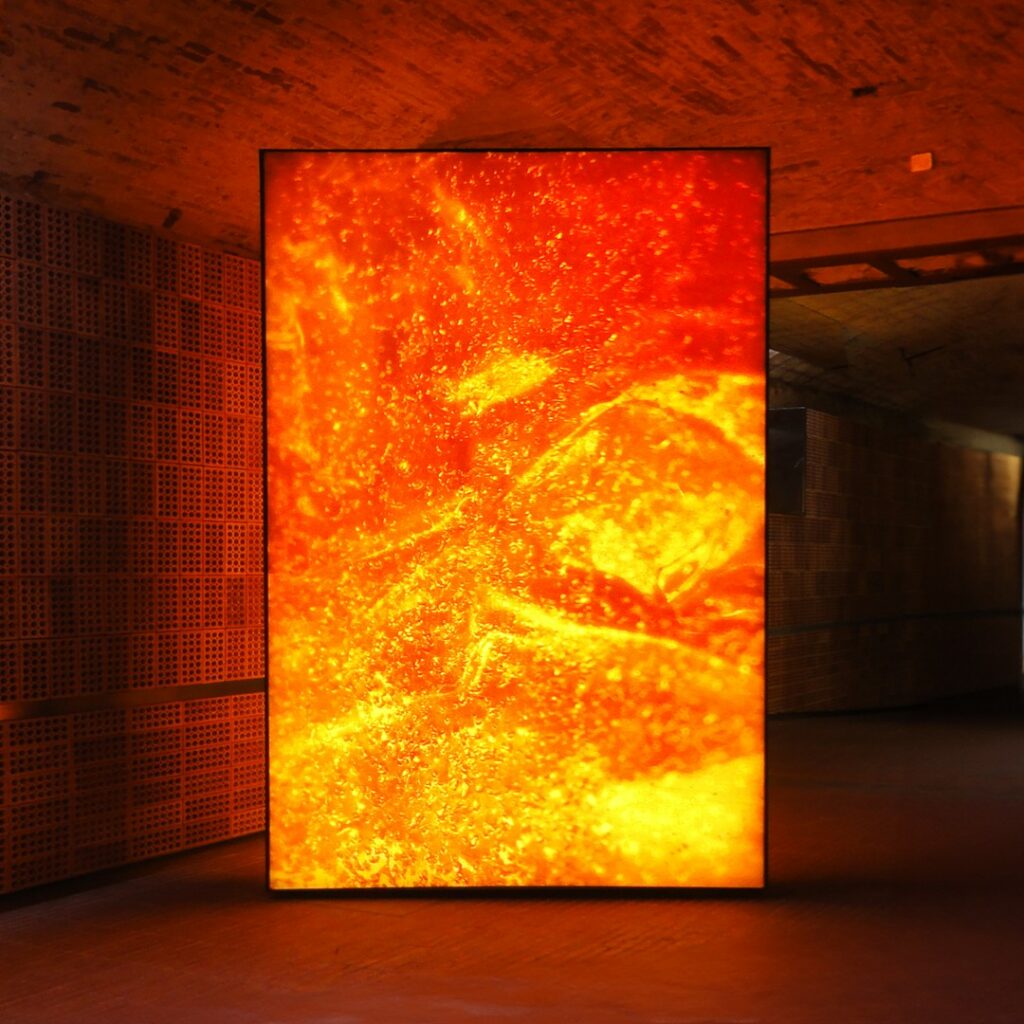
At the Moritz Barcelona brewery, we use luminous panels with beer textures to create a special experience during visits. These panels, designed by the well-known architect Ateliers Jean Nouvel, have a unique structure with LED lights inside.
To achieve the tone the architect was looking for, the PVC tarpaulin inside had to be printed both inside and outside
.
The correct application of a sign is not only a technical issue, but also a strategic one: it must respond to the brand positioning, the spatial context and the communication objectives. The selection of the right system, its scale, materials and type of illumination are decisions that require specialized knowledge in corporate identity implementation.


Signs, when well applied, reinforce the brand’s corporate identity. If you have a project, contact our team of corporate identity specialists.