The hotel industry has changed dramatically, evolving from a simple accommodation provider into an immersive experience that creates an emotional connection between guests and their destination. Read on to discover what wayfinding in hotels is, the key factors for implementing it successfully, and some of the most inspiring projects from recent years.
What Is Wayfinding in Hotels?
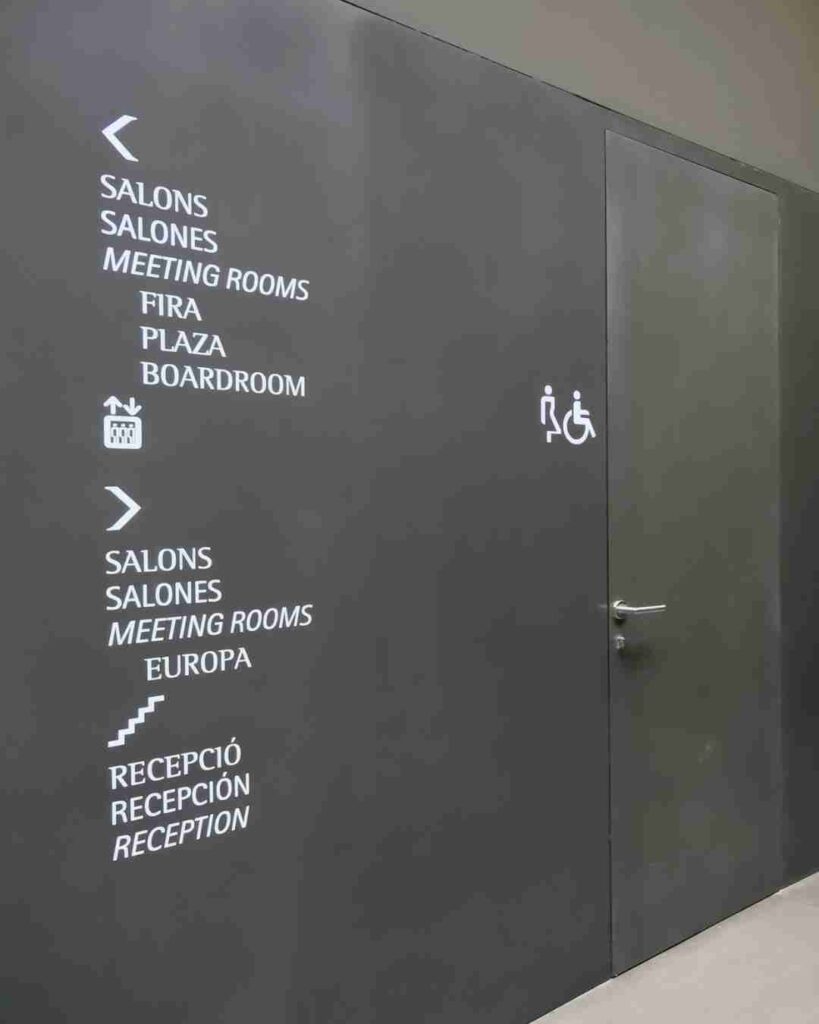
Wayfinding is a set of strategies, techniques, and systems that help people understand a space and navigate it easily. In hotels, wayfinding encompasses the solutions that assist guests and visitors in moving through different areas and reaching their destination in a clear, comfortable, and autonomous manner.
Wayfinding is much more than simply installing signs. What distinguishes wayfinding from conventional signage is the definition and development of a spatial orientation strategy. Alongside this strategy, wayfinding design involves a process with multiple stages, including user analysis, flow analysis, location planning, and graphic design. The result is a comprehensive and efficient system that improves the experience of everyone seeking their destination.
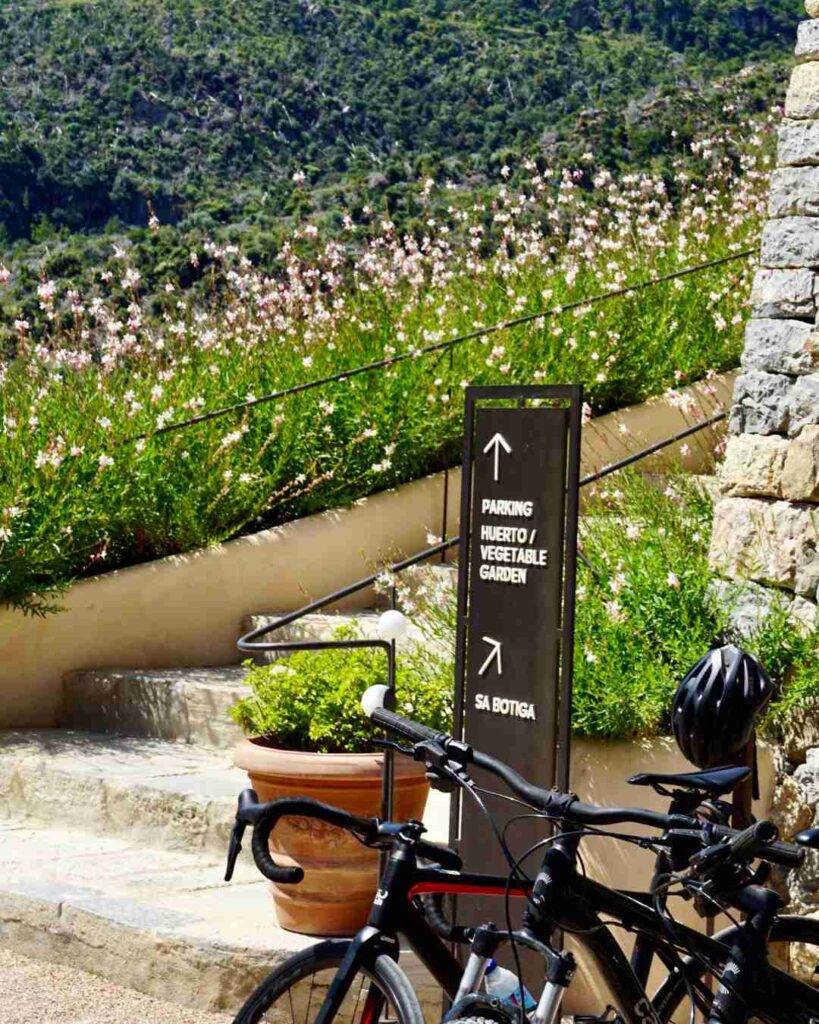
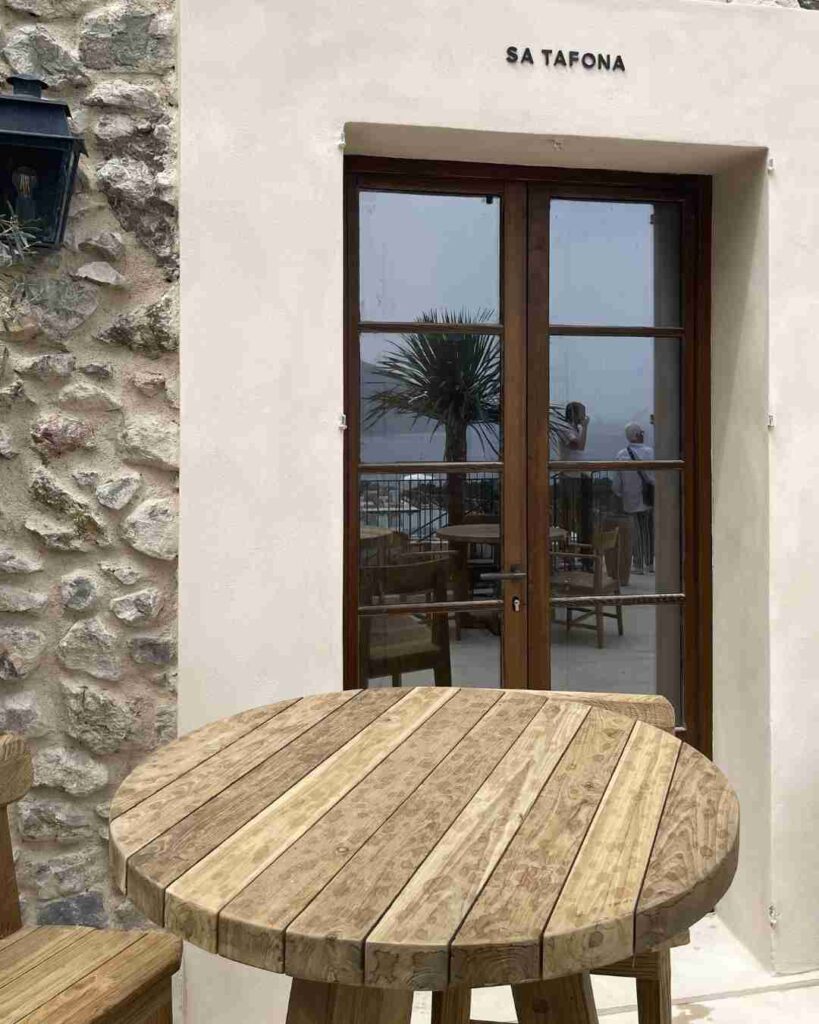
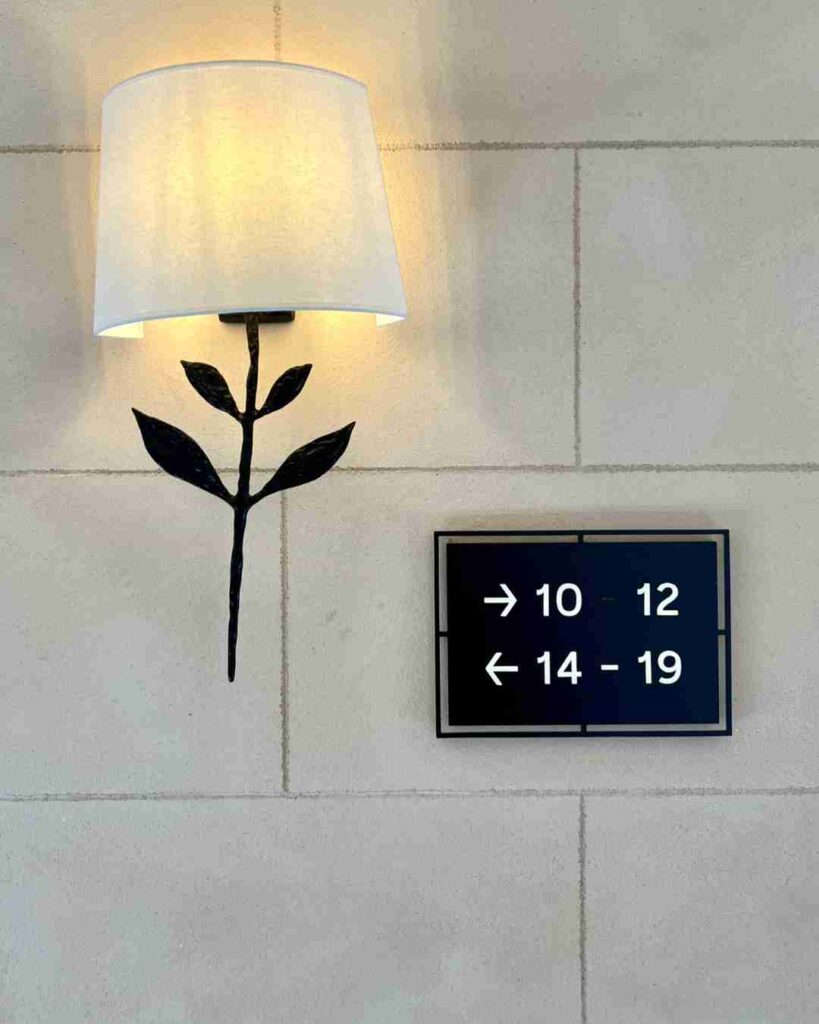
Featured Wayfinding Projects in Hotels
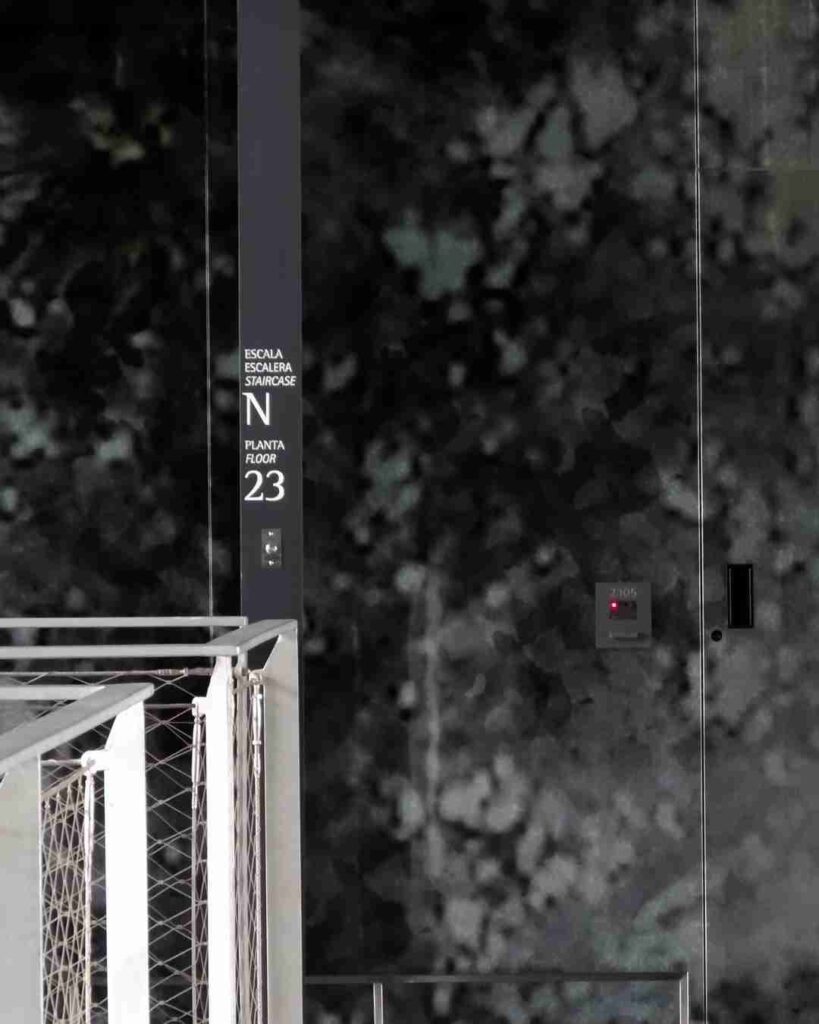
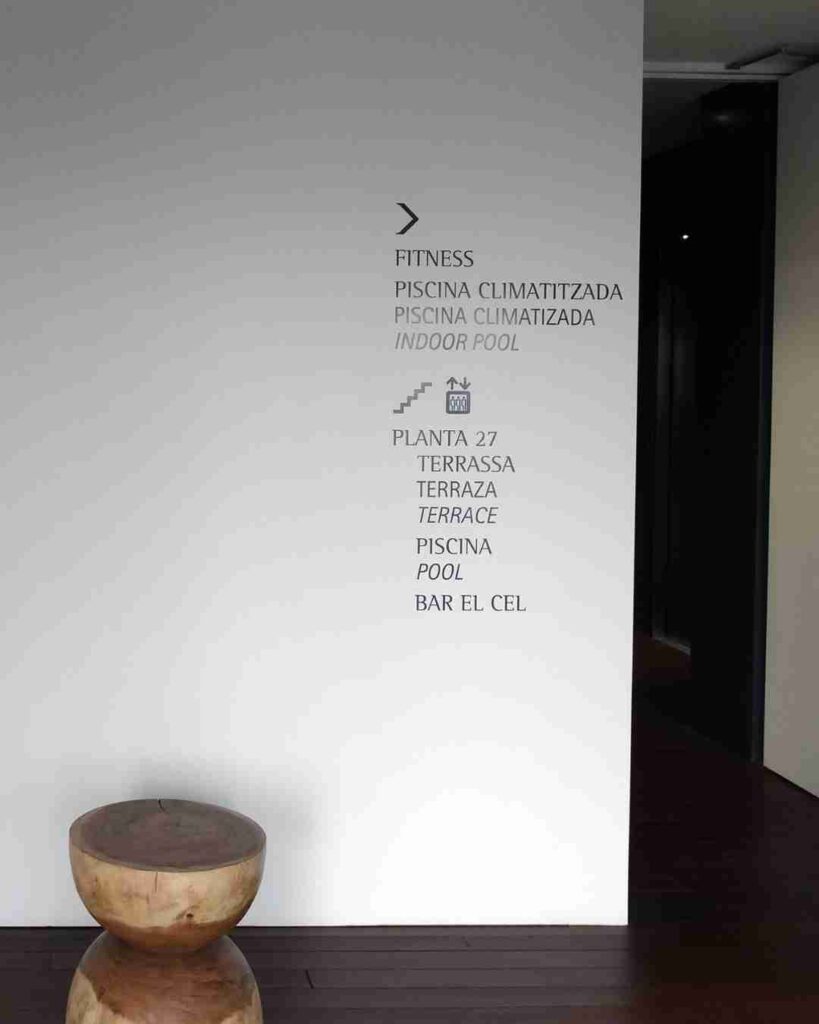
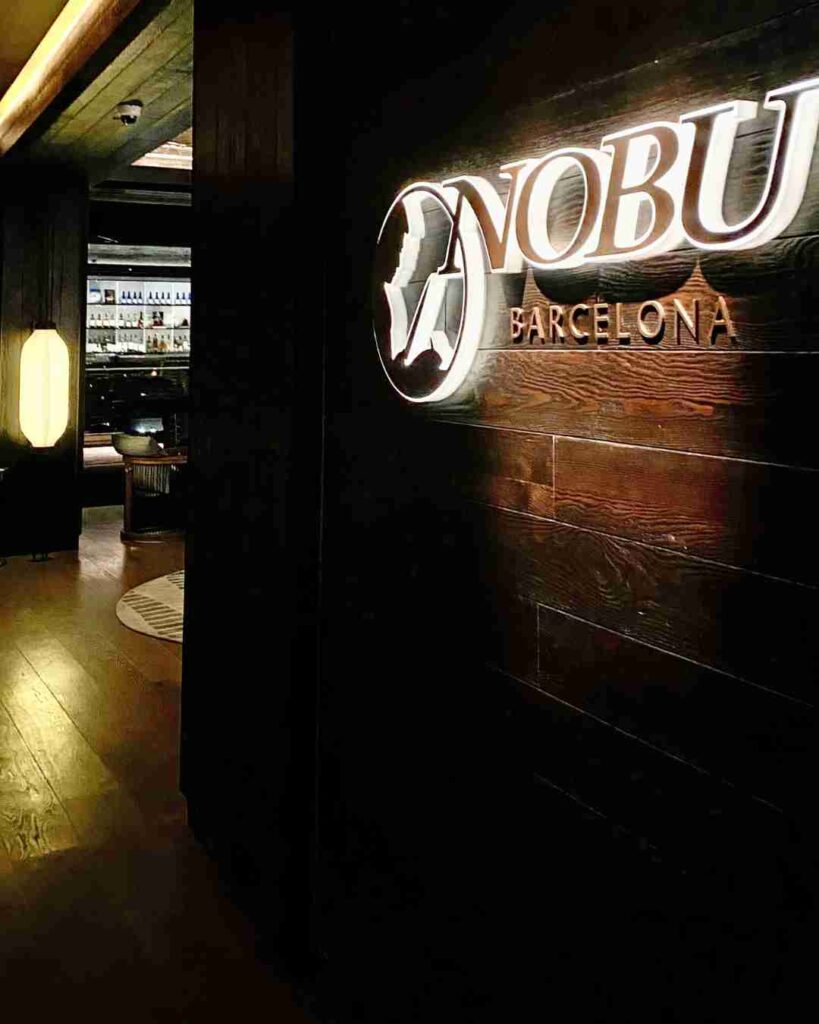
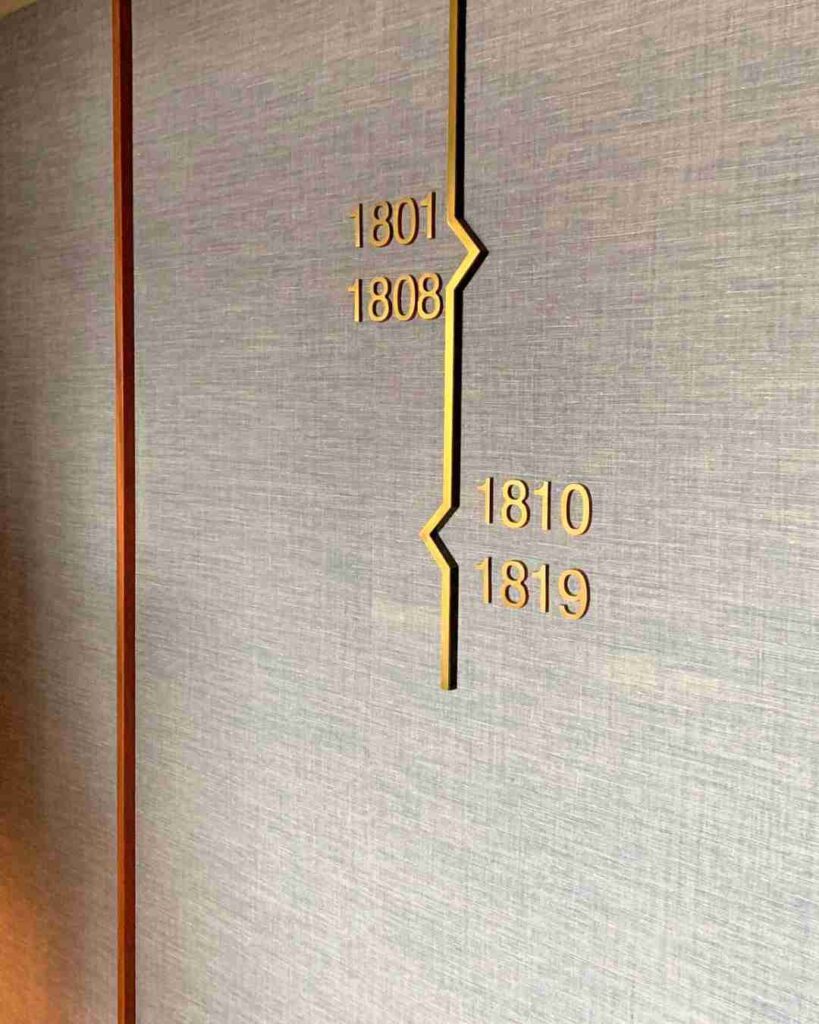
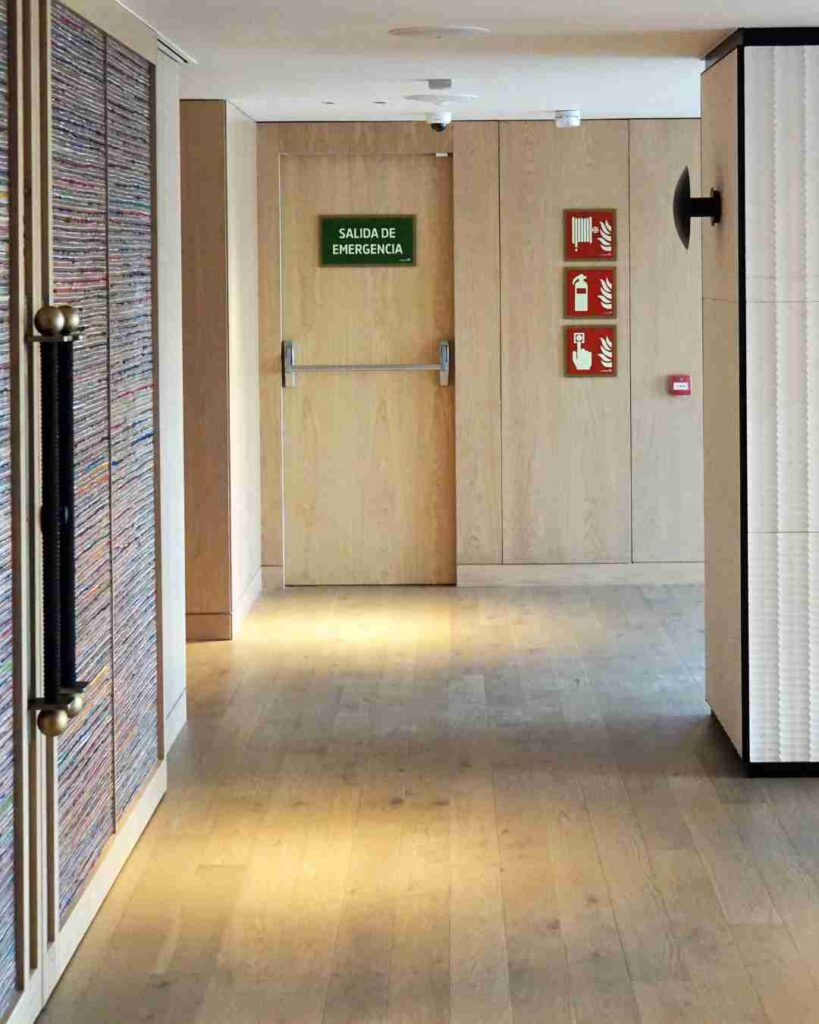
Why Is Orientation Important in a Hotel?
A high percentage of hotel guests and visitors are entering the property for the first time. For them, especially in environments where accommodation, dining, wellness, leisure, and business services coexist, uncertainty can lead to a negative experience.
The benefits of implementing a strategic wayfinding system include:
- Reducing guest uncertainty.
- Improving the perceived quality of the establishment.
- Facilitating movement through complex spaces.
- Reducing the number of inquiries directed to staff.
- Optimizing circulation flows.
- Strengthening the brand experience.
- Supporting the hospitality concept by increasing perceived value beyond physical comfort.
The Impact of Wayfinding on the Hospitality Industry
Hospitality elevates the traditional concept of accommodation into a holistic experience: a combination of perceptions, emotions, and memories that guests develop through every interaction with a property. As part of this experience, a wayfinding system accompanies guests throughout their stay, becoming a key factor in creating a memorable experience.
Guests form an emotional impression of a place almost immediately. In hospitality, this is known as the “first five minutes” principle. Smooth access and clear, intuitive signage promote a comfortable arrival and a positive perception from the very first moment.
In hospitality, the “first five minutes” principle states that guests form an almost immediate emotional impression of a place.
Signage as Part of the Architecture
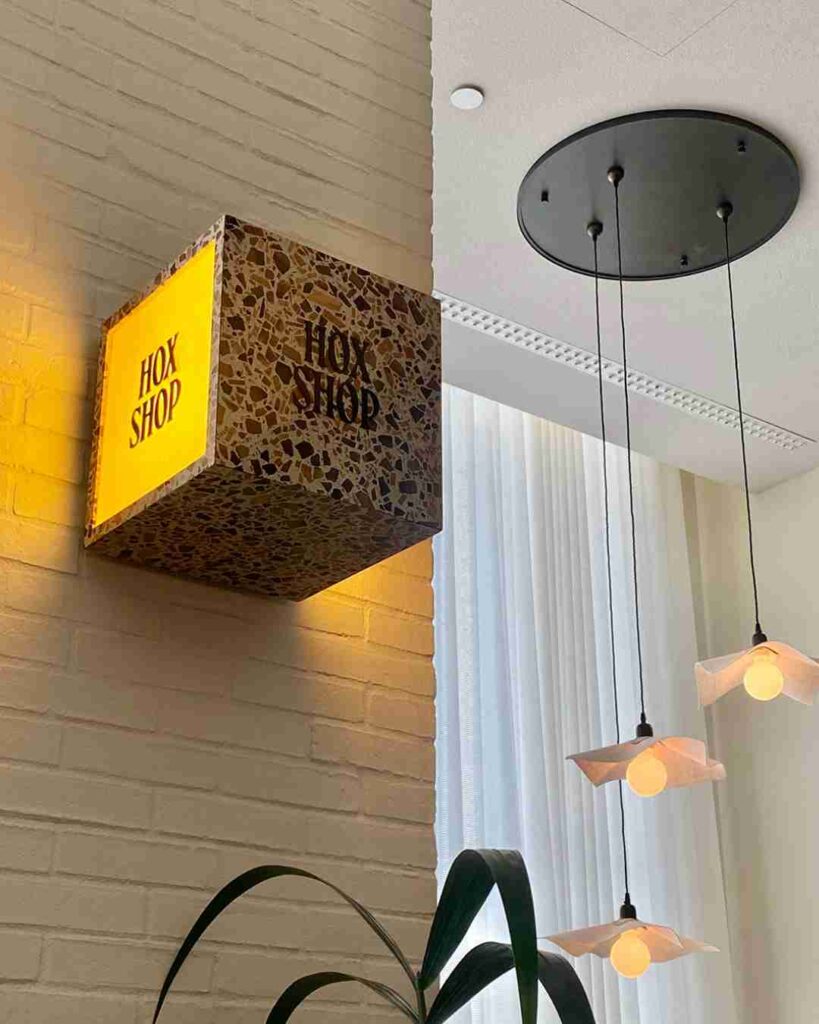
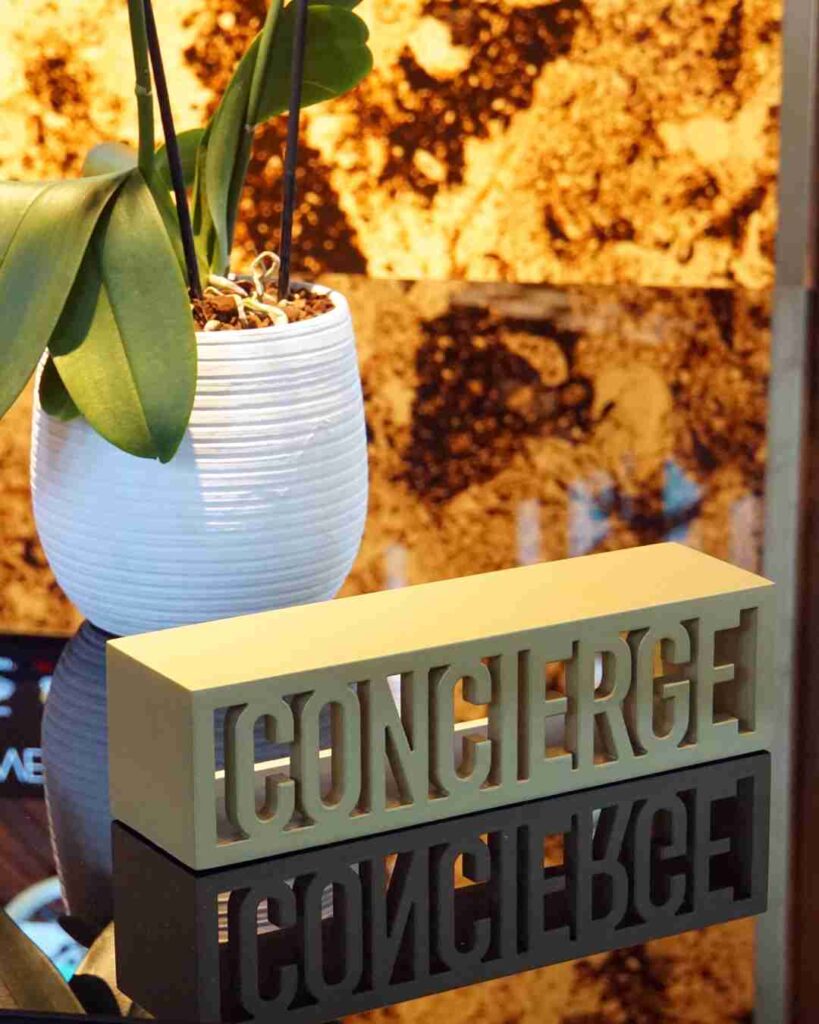
Architectural and interior design make it possible to personalize any environment. Beyond its functional role, wayfinding becomes an integral part of the project, helping to build an authentic narrative.
Materials, typography, lighting, finishes, and information systems work together to create a coherent experience aligned with the hotel’s identity.
The result is more intuitive orientation, a better user experience, and a natural integration with the surrounding environment.

Designing Wayfinding Systems for Hotels
The guest experience is an emotional connection built through multiple interactions. It begins with the booking process and extends to personal preferences, architecture, décor, and the service received throughout the stay.
The world’s leading hotels achieve excellence through a combination of personalization, attention to detail, discreetly integrated technology, and a narrative that is consistent with their location and identity. Wayfinding is also part of this narrative.
Following this approach, at Signes we develop strategic wayfinding projects for hotels in which architecture, user experience, and orientation systems are conceived as an integrated whole.
We analyze routes, study user behavior, define information hierarchies, and design systems that facilitate movement, improve spatial understanding, and contribute to a smoother and more comfortable experience for guests.
Frequently asked questions about Wayfinding
▶ What is wayfinding in hotels?
Wayfinding is a strategic system that helps guests and visitors understand a space and navigate it efficiently through signage, information systems, and spatial design.
▶ Why is signage important in a hotel?
Signage reduces uncertainty, improves guest comfort, facilitates movement, and enhances the overall perception of the hotel.
▶ What benefits does a wayfinding system bring to the guest experience?
It improves orientation, reduces confusion, enhances accessibility, optimizes circulation, and contributes to a more positive and memorable stay.
▶ How is signage integrated into hotel design?
Signage is incorporated into the architectural and interior design concept through materials, typography, lighting, finishes, and information systems that align with the hotel’s identity.
Related posts we recommend:
🫶 Humanizing healthcare spaces.
➡️ Wayfinding: what it is, examples and how it improves the user experience