In Spain, according to OCU surveys, each patient who arrives at public hospital emergency services remains in the waiting room between 50 minutes and 3 hours before being attended to. In some cases, especially when hospitalization is required, hours turn into days, and the hospital comes to be considered a second home that is rarely as welcoming as one’s own.
Modern hospital architecture works precisely in this direction: making patients and families feel in a comfortable and more humanized environment. This emotional well-being achieved through the humanization of spaces also has short-term benefits for healthcare staff, who feel more motivated and collaborative.
Humanization of hospital spaces
Humanization in healthcare is a process addressed across a variety of areas, from medical care and communication to the buildings themselves and their surroundings. Within the spatial ecosystem, humanizing hospital spaces means making them worthy of human beings and consistent with the values and humane treatment that are expected.
Light, materials, colors and images influence how we feel. But so do other less obvious elements, such as environmental clarity or ease of orientation.
It is not only about improving the aesthetics of environments, but about creating an ecosystem that fosters the emotional well-being of patients, families and healthcare professionals. Architecture, interior design, environmental psychology, graphic design and signage converge to address a shared need: reducing negative emotional impact through space.
Graphic design: colors and shapes to combat sadness
Graphic design applied to the humanization of spaces transforms generic and functional environments into emotional and welcoming places, improving community well-being. Through the use of color, typography and visual elements, it creates warmer, more relaxing and pleasant environments that reduce anxiety and sadness.
In this discipline, all graphic and decorative elements used for humanization serve a purpose. Often, recognizable figures are used to suggest a story and transport us, almost immediately, to calm and beautiful places.
If we think of a children’s hospital, projects such as “The Animals’ Hideout”, a design for Hospital Sant Joan de Déu by Arauna Studio y Rai Pinto Studio, two studios we regularly collaborate with in project development—create a colorful and friendly atmosphere where young patients can let their imagination run free and feel more at ease.


“The Animals’ Hideout” is a visual narrative that runs through the different areas of the hospital. The system is built from life-size animal silhouettes that hide behind architectural elements, using a very specific visual language based on the repetition of patterns, a fixed color palette, and a constant dialogue between 2D and 3D.
On the one hand, it addresses the need to “pediatricize” the hospital and, on the other, contributes to building a continuous visual identity for a large-scale space, making it useful for users while respecting and integrating the existing architecture.
The project was initially conceived for a specific area, but it soon expanded to all floors of the hospital and even beyond its walls, into the outdoor spaces.
Wayfinding and signage: more empathetic hospitals that support their patients
Humanizing is a process that involves elements of very different natures working together. Wayfinding design as a discipline and signage as an industrial production are a fundamental part of this process, working jointly with other disciplines such as graphic design.
In any humanization process, empathy is a key concept. In wayfinding, we put ourselves in the user’s place to facilitate the resolution of spatial challenges: we identify and understand different user types and their flows. From there, at Signes we develop a strategy that becomes visible in both graphic design and the industrial design of interior and exterior signage, in customized families of pictograms and, in some cases, in a user guide.
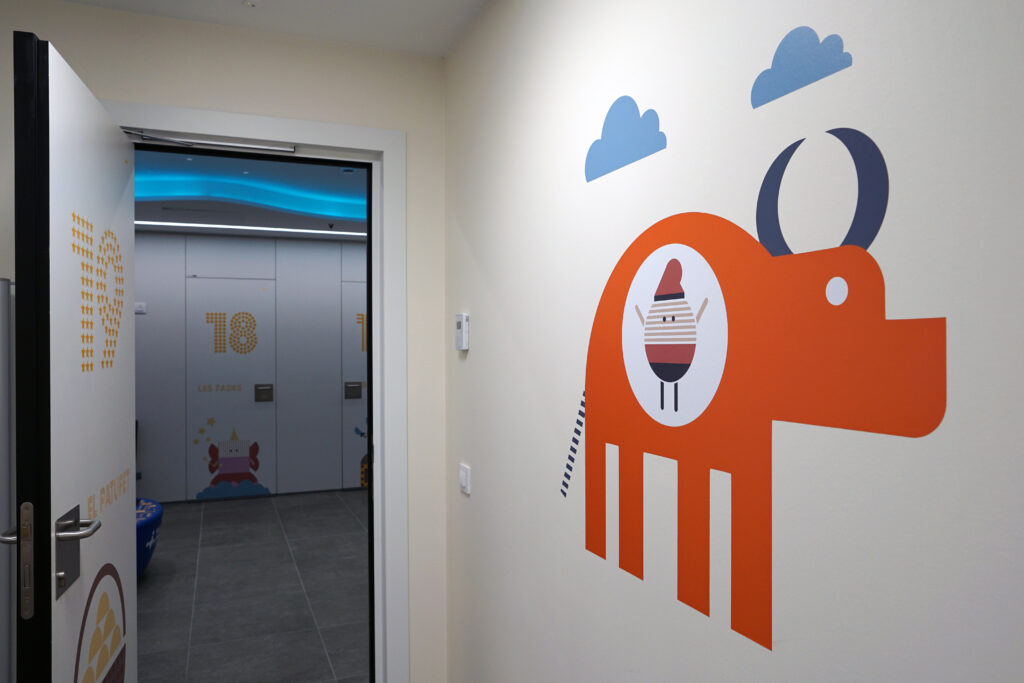
Hospital Infantil i Hospital de la Dona Vall d’Hebron. Implementation: Signes | Design: Chispum (Javi Royo) 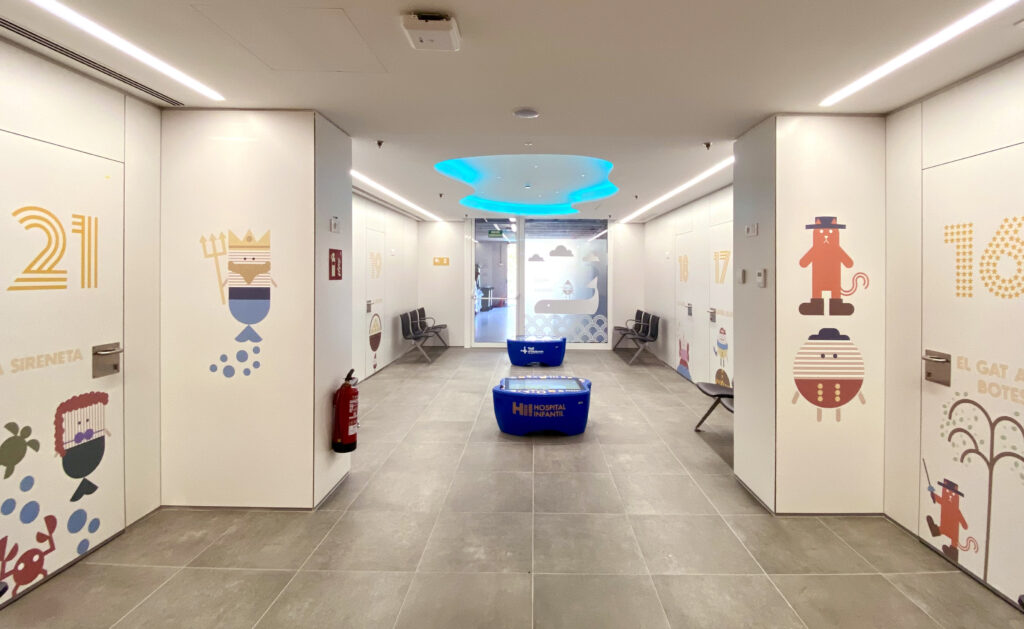
Hospital Infantil i Hospital de la Dona Vall d’Hebron. Implementation: Signes | Design: Chispum (Javi Royo) 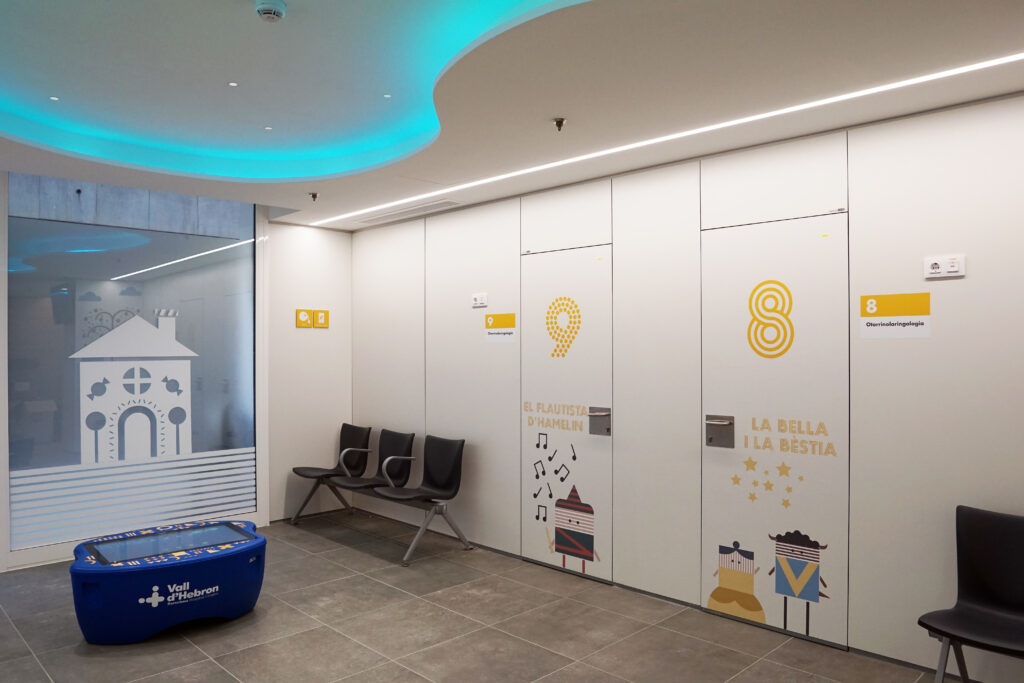
Hospital Infantil i Hospital de la Dona Vall d’Hebron. Implementation: Signes | Design: Chispum (Javi Royo) 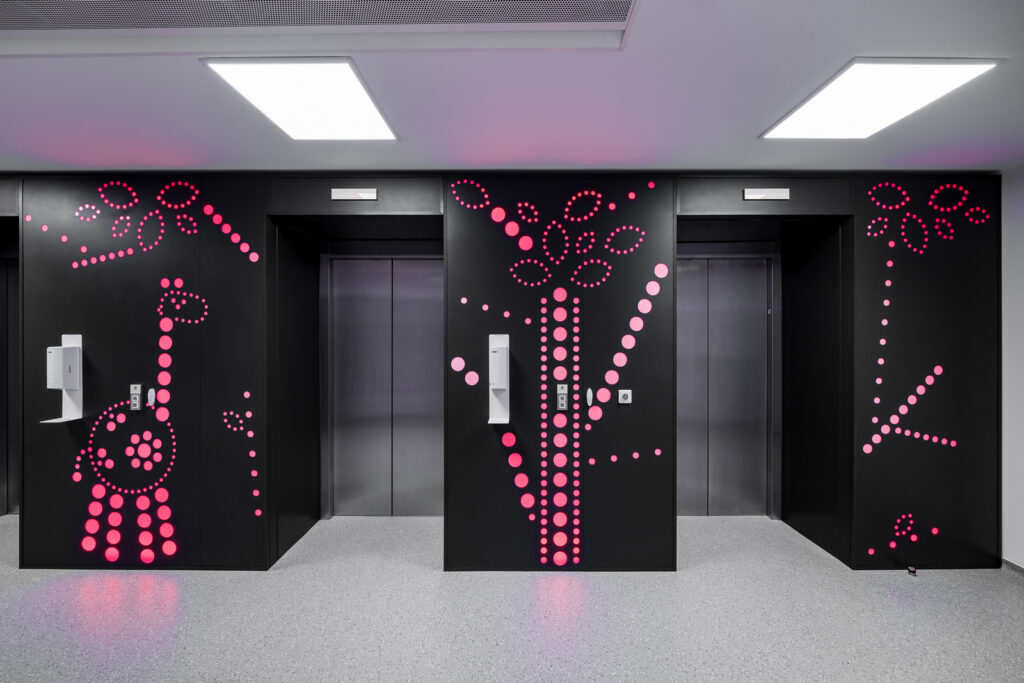
Dăruiește Viață Hospital (Romania). Design: Dăruiește Viață | Wayfinding Project: Signes | Photography: Cătălin Georgescu
In conclusion: adopting a 360º approach to hospital humanization, integrating graphic design, wayfinding and signage, enables the development of coherent, efficient solutions aligned with the user experience. From conceptualization to implementation, this global approach ensures more understandable, accessible and emotionally supportive spaces, where each element serves a purpose and contributes to people’s well-being.