Signaling and integrated signaling systems are different concepts, although they are often complementary. Then, how to choose between the two options? It all depends on the particularities of each project.
In this post we explain the keys to choose, with total precision, between placing signs or strategically implementing a comprehensive signage system in your project.
Signaling vs. integrated signaling system
Signage is the set of physical signs that communicate a message and serve to inform, indicate or warn of something in a space. They work well when the objective is to solve a specific problem. An integrated system, on the other hand, is a coordinated set of tools and interventions that structure the entire experience of the route, anticipating doubts and facilitating orientation from the very beginning.
While a sign answers a specific question, an integrated system is designed with how people move, understand and make decisions within a space. Therefore, placing only signals is not the same as having an integral system: there can be signals within an integral system, but not the other way around.
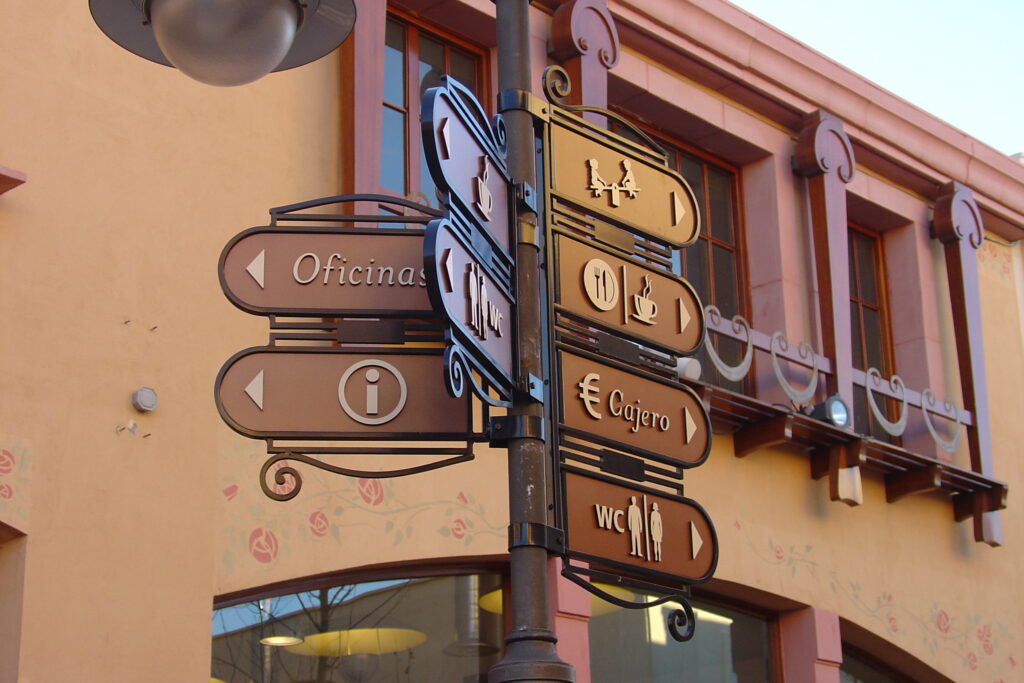
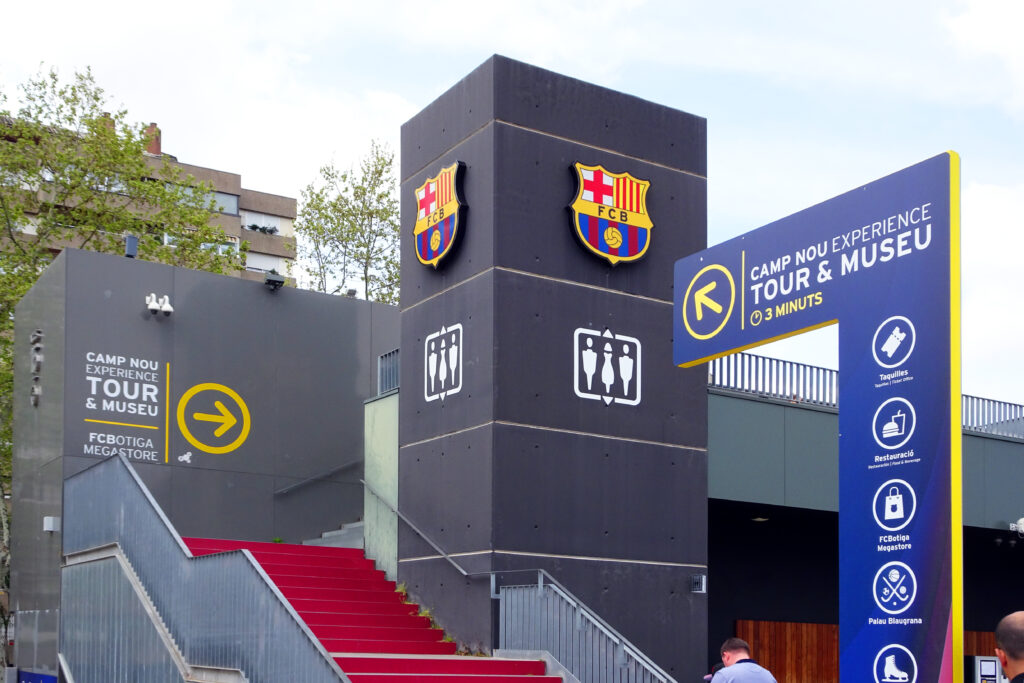
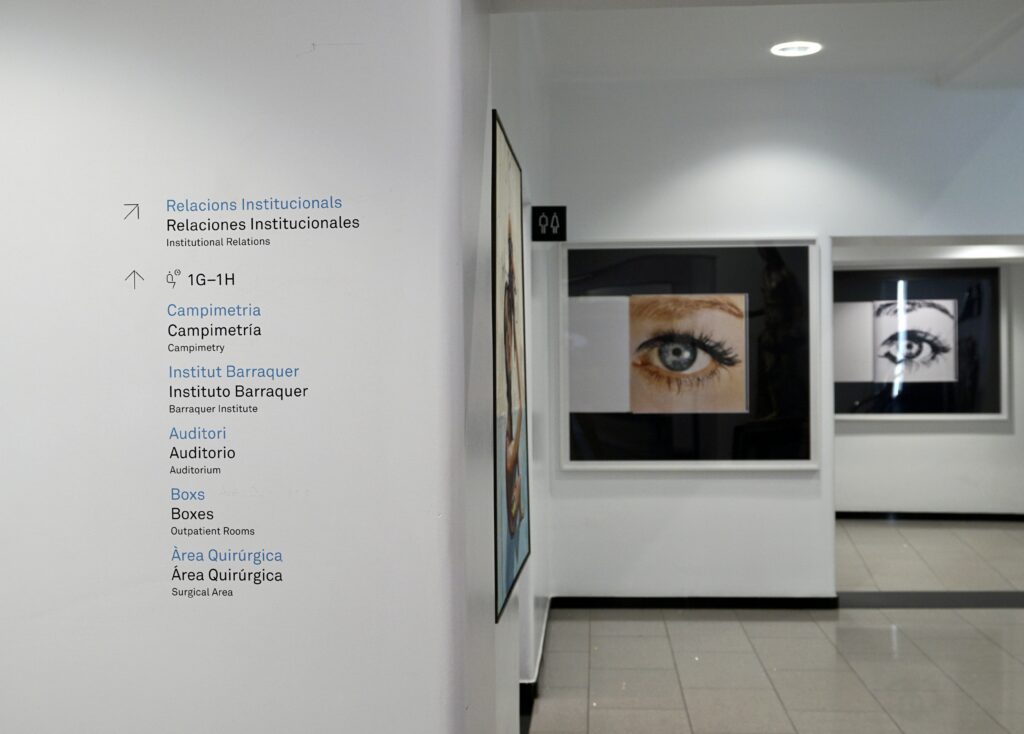
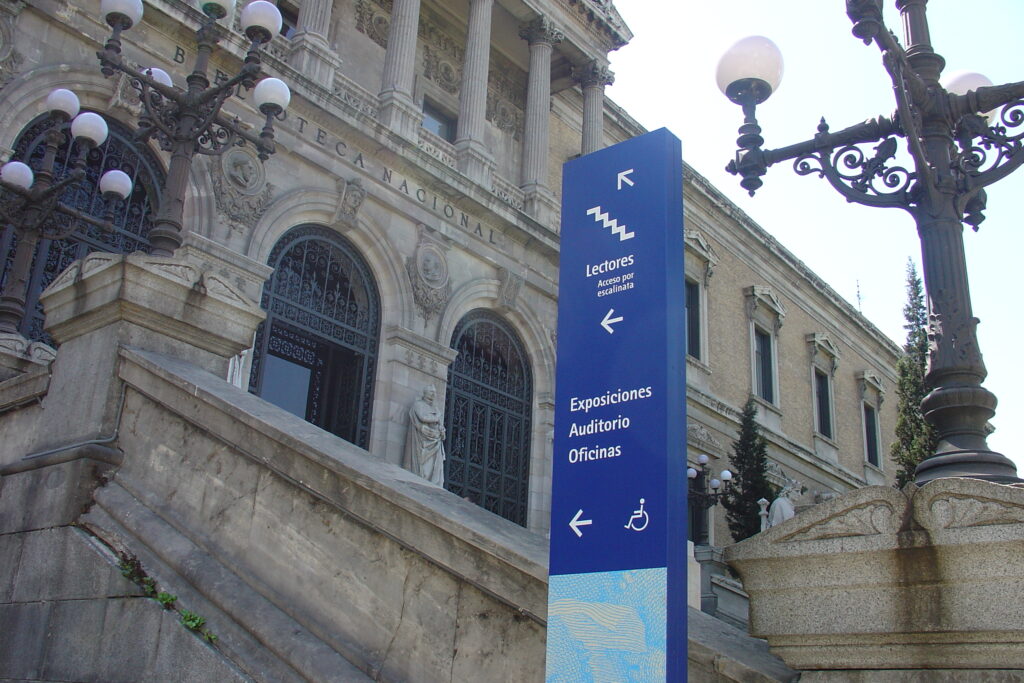
Signage or an end-to-end experience: what does your project need?
If you are starting from scratch, there are some key questions to ask yourself before deciding between signage or an integrated signage system:
- Are you looking to solve a specific problem or improve the overall user experience?
- Are your users diverse in terms of language, nationality, mobility or stress level?
- Is the space complex, large-scale or does it present multiple possible routes, as in museums, airports, stadiums or hospitals?
Asking and answering these questions helps us to identify whether a one-off solution is sufficient or whether the project requires a more comprehensive and structured approach tailored to each case.
For those spaces that already have punctual signage, but want to improve the user experience or correct orientation problems, a comprehensive system is more appropriate. In these cases, it is not enough to add more signs: correcting a bad system involves incorporating strategy. This involves analyzing routes, understanding the different user profiles, prioritizing information and coordinating all the elements involved in orientation so that they work as a whole.
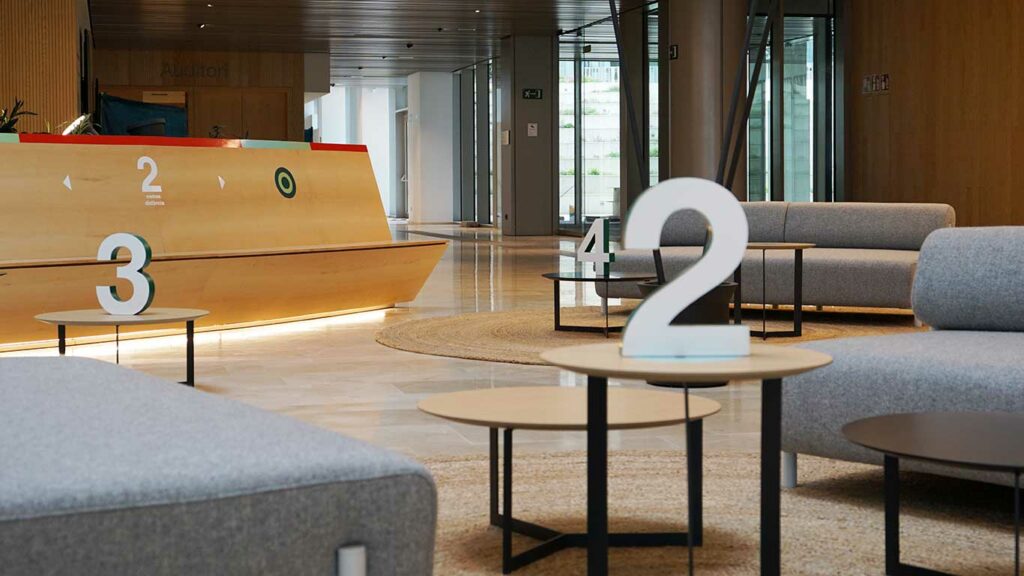
A comprehensive signage system can be applied in all kinds of contexts and scales: from hospitals or administrative campuses, such as the Administrative Campus of the Generalitat de Catalunya, to projects of national scope, such as the tourist signage of Azerbaijan. The advantages of applying this strategy are immediate: greater autonomy, reduced confusion, optimization of flows and an improvement in taking care of how people feel as they arrive at their destinations.
Each space has specific needs. At Signes we design and implement solutions adapted to each project, from tourist and corporate signage to interior and emergency signage, among others.
Comparative table: signage vs. integrated signage system
This table summarizes the main differences between signage and integrated signage systems to help you identify which approach your project needs based on its scale, complexity and type of users.
| Criteria | Signage | Integral signaling system |
|---|---|---|
| Approach | Point solution | Global targeting strategy |
| Target | To indicate a destination or specific information | Design the complete travel experience |
| Type of intervention | Isolated elements | Coordinated and planned system |
| Time of application | When a problem arises | From the project phase |
| Relationship between signals | Independent of each other | Connected within a system |
| User experience | Resolves specific doubts | Reduces confusion and generates autonomy |
| Flow management | Not analyzed | Studied and optimized |
| Diversity of users | Limited consideration | Languages, accessibility, mobility, stress levels |
| Space scale | Small or simple | Medium, large or complex |
| Integration with the architecture | Partial or subsequent | Total, from design |
| Accessibility | Timely compliance | Integrated accessibility along the entire route |
| Result | The user arrives at his destination | The user is oriented with clarity and confidence |
| Common examples | Isolated signs, directories | Museums, airports, hospitals, campuses, cities |
| Strategic value | Low | High |
In conclusion: placing signs is the right thing to do when it comes to solving a specific problem.
Designing a comprehensive signage system is preventing the problem from existing, improving the user experience and allowing people to navigate the space clearly and effortlessly.
An integrated signage system is a strategic decision. To implement it successfully, it is essential to rely on a multidisciplinary, experienced team such as Signes, with more than 40 years of expertise in national and international projects.